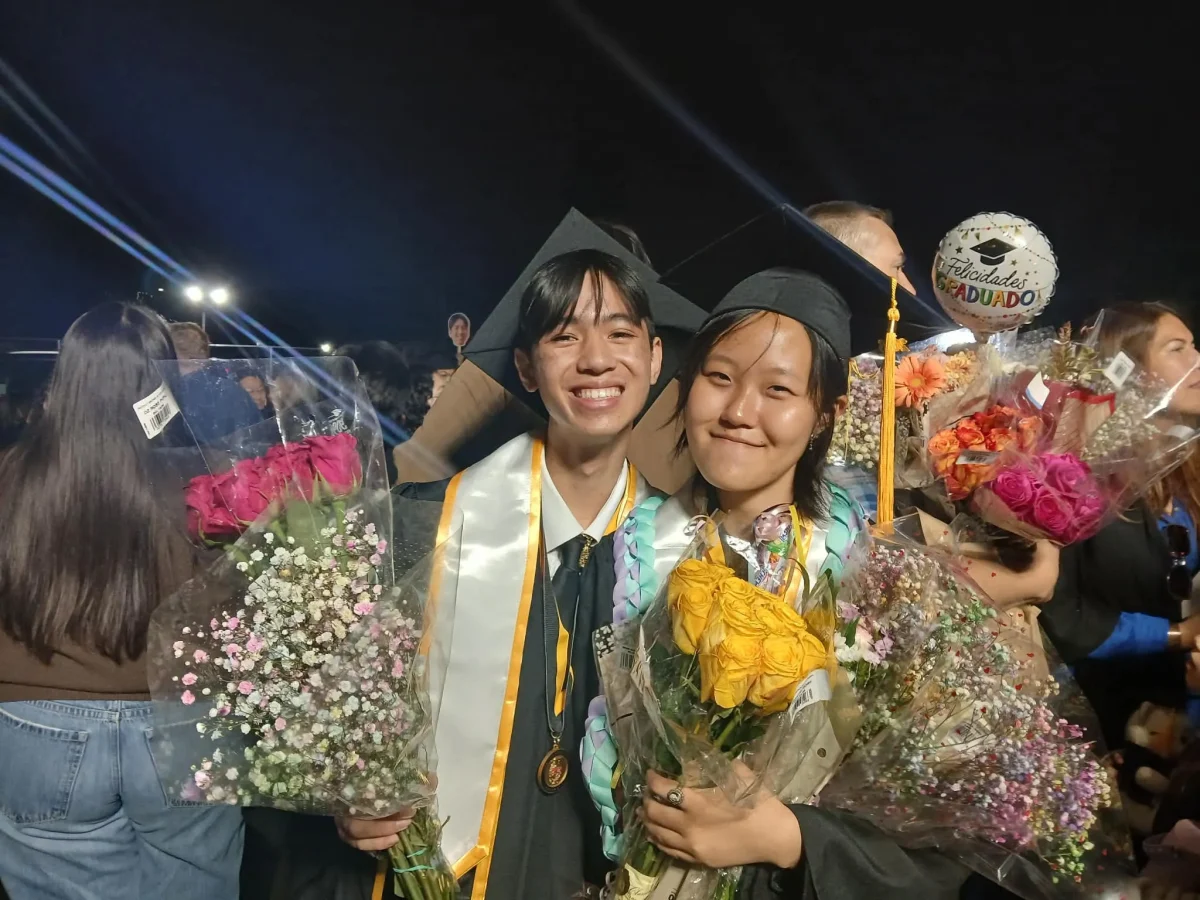
Everyone looks forward to the day they walk on stage and don their own cap and gown, but not many look backwards to see how these things came to be. With the addition of more traditions helping to evolve the graduation ceremony, there comes a point where we look back to the past and see where these traditions and festivities come from.
The concept of graduation ceremonies dates back to the 1100s in cities like Paris and Bologna. These ceremonies served as a rite of passage, turning students into teachers. These teachers were considered masters of their art. Those who graduated were welcomed into the teaching guild and were granted the license to teach, or licentia docendi.
The year 1642 brought the first American graduation ceremony at none other than Harvard University. The ceremony saw nine graduates, none of whom received physical diplomas. Instead, they were awarded their degrees orally through Latin or Greek. These students weren’t called up in order of their last names, but rather their parent’s socioeconomic status, reflecting the old-school values of the era.
In the 19th century, high schoolers were at last given the chance to experience their own graduation ceremonies. This is when it received a more inspirational keynote rather than just the event that marked the end of your education.
Only recently in the 20th century did we begin to see the familiar graduation ceremony we all know today. In the 1920s and 1930s, graduation ceremonies were given a more inspirational keynote and not simply an academic lecture.
This was a result of high school becoming more universal and not a privilege for the elite. Going further back to 1905, a traditional walk down the aisle paired with music in the background was first introduced by Yale when they used the song “Pomp and Circumstance” by Edward Elgar.
When the time comes for you to finally take your diploma and first steps into the adult world, you’ll know how it all came to be.