Springtime is upon us, which can be interpreted in several different ways depending on who you ask. For students, it’s the anticipation for a week-long break, and the worry of upcoming finals. In nature, it’s the beautiful blooming of flowers, the free falling of rain, and the awakening of animals. Around the world, spring is also celebrated in a number of unique holidays for hundreds of countries and religions.
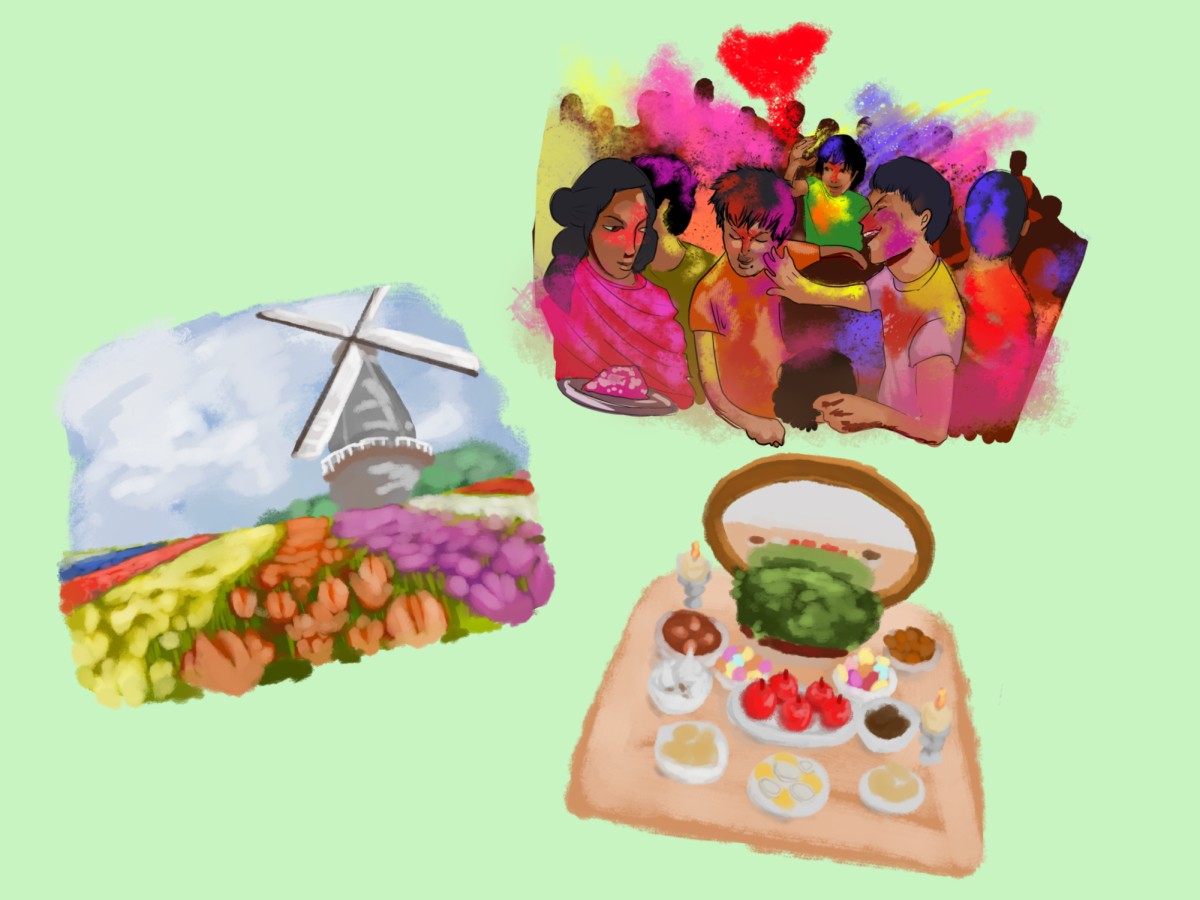
In northern India, Holi, or The Festival of Colors, takes place near the end of the Hindu calendar, and is meant to welcome spring and mark the end of winter. The customs include lighting bonfires and throwing a vibrant, fine- texture powder, called gulal.
Part of the Buddhist seven day observance of Haru no Higan, Shunbun no Hi (Vernal Equinox Day) is a Japanese national holiday signifying the beginning of spring. It is a time meant for enjoying nature and spending time with family. Many people organize picnics near cherry blossom trees, which are a cultural symbol of beauty and life.
Nowruz, which means “new day” is also known as the Persian New Year. Often, families will gather around and prepare a Haft-Sin table. These displays present seven essential items, all starting with the letter s, each symbolizing different aspects of prosperity for the new year.
In Christianity, Easter is a commemoration focusing on rebirth, hope, and salvation. On the determined Sunday, many Christians gather with friends and family for special church services. However, Easter is also a secular celebration of spring’s new beginnings for all. Many participate in scavenger hunts and painting eggs, with the rabbit being a symbol dating back to medieval German folklore.
Lunar New Year is based on the traditional Chinese calendar, with each year being associated with one of the twelve Chinese zodiac signs, though the specific traditions vary depending on the East Asian country. However, many of the common customs include elders giving out red envelopes, offering items for ancestors, and setting off fireworks to scare evil spirits.
Following the events of World War II, the citizens of the Netherlands started hosting flower parades as a way to socialize with other nations. Predominantly using hyacinths, daffodils, and tulips, they create elaborate sculptures, which still bring visitors to the Keukenhof Botanical Garden for the Dutch Tulip Festival today.
In such a diverse community, it is important to learn and understand the sacred history behind the world’s holidays. Each of these distinctive festivities serves as a physical and spiritual way humans around the globe connect with their communities, share their sense of identity, and celebrate the coming of a new season.